 Phone orders on 0208 088 2269/ £14.99 delivery for all orders
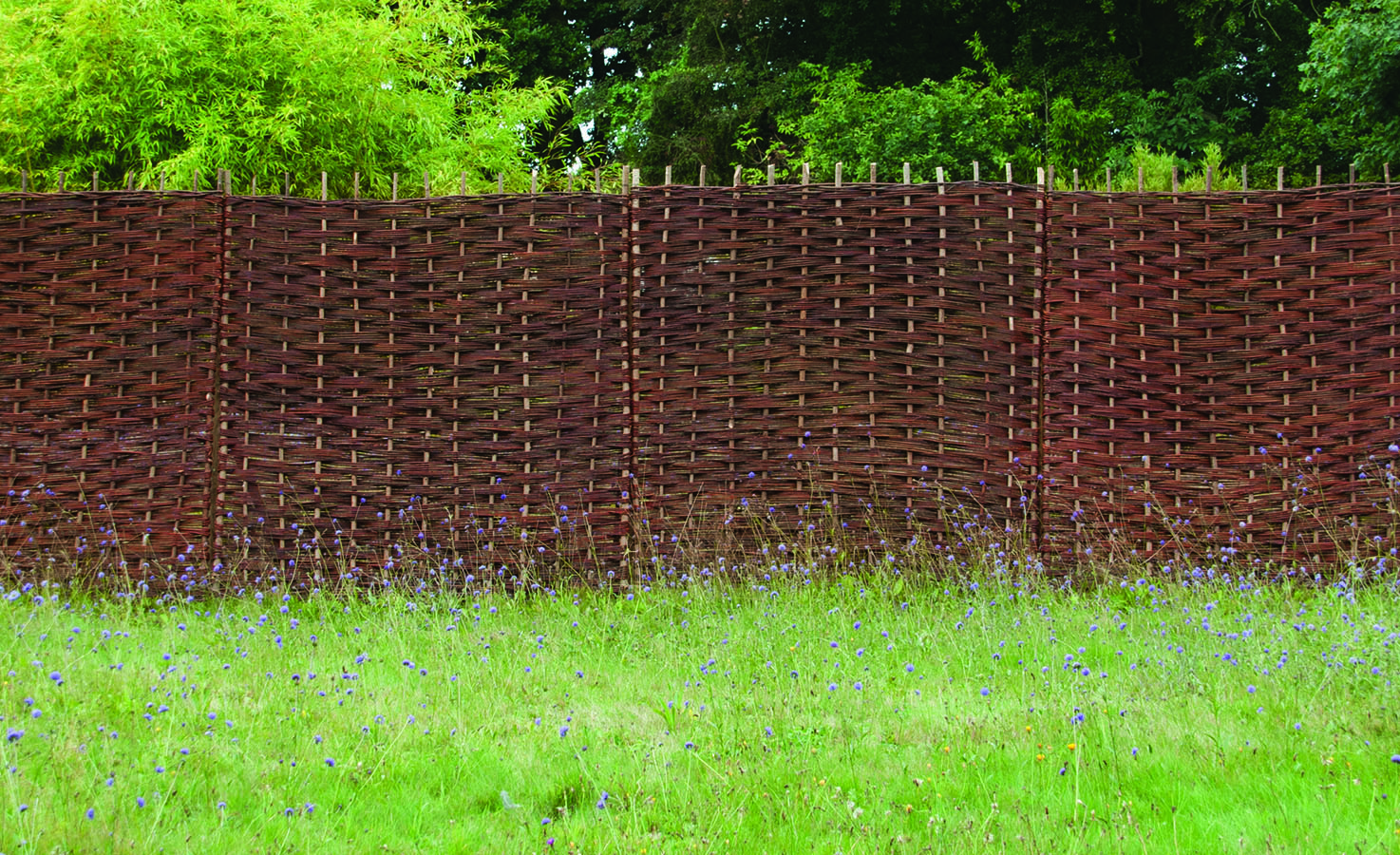
Five to ten years in an ordinary British garden. That is the honest answer, and it is the same range we give for hazel — but willow gets there by a different route, fails in a different way, and shows its age differently. If you want to know which end of that range yours will land at, the useful thing is understanding what a willow rod actually is.
Willow is young wood, and that explains almost everything
Both materials are coppiced — cut back to the stool and left to regrow, so the tree is never felled. But the rotation is completely different, and this is the fact that everything else follows from.
Willow
Cut on a one to two year rotation. Every rod in your panel is a slender, whippy season’s growth — which is exactly why it bends into a tight, even weave without splitting.
Hazel
Cut on a seven to ten year rotation. Thicker, older, denser wood, which is why a hazel weave is looser and more open — and why hazel is the sturdier panel.
So willow’s fineness is not a compromise, it is the point. The tight, close weave that makes willow better at screening and gives it that finished, almost furniture-like surface is only possible because the rods are young and flexible.
The trade-off is substance. Less wood in each rod means less to wear away, and it is why hazel is the more robust of the two where a fence takes knocks. In a garden where nothing is barging into it, the difference barely shows.
How a willow panel actually reaches the end
Worth knowing because it looks different from hazel, and people sometimes think a willow panel is failing when it is simply settling.
A thick hazel rod tends to go by rotting through — it stays whole but softens, usually at the bottom where it has been in contact with damp. You can push a thumbnail into it.
A slim willow rod is more likely to go by becoming brittle and snapping. Individual rods dry out, lose their flex, and eventually crack rather than bend. The panel stays standing but you start to see broken ends in the weave, most often along the top edge where sun and wind are hardest.
What that means practically: check a willow panel by flexing it gently at the top rather than by prodding the bottom. A panel that still springs has years left in it. One that feels stiff and crackles is telling you something, even if it looks perfect from ten feet away.
A handful of broken rods is not a failure and is not worth acting on. A woven panel is held by tension along its whole length, and it tolerates losing a few rods without any loss of strength.
How willow changes colour as it ages
This surprises people who expected it to weather grey, and it is one of the nicer things about the material.
Willow starts as a deep, warm red-brown — russet through to oxblood depending on the light. Over the first couple of seasons it softens to a dustier, quieter version of the same colour, but it keeps the warmth. It does not silver. Hazel does, going progressively more grey, but willow stays on the warm side of the palette for its whole life.
A five-year-old willow fence still reads as red-brown. That matters if you chose willow for the colour in the first place, because you are not going to lose it.
The three things that actually decide your number
Not the material, and not the weather. In roughly this order of importance:
- Whether the bottom edge sits in wet ground. An inch or two of clearance underneath is worth more than everything else on this page combined. Rain dries; soil does not.
- Whether it can move. Four cable ties per upright, not two. Movement works a weave loose, and a loose weave loses rods. Two fixings let a panel rock in wind; four hold it still.
- Whether it gets air on both sides. A panel flat against a wall or buried behind dense planting stays damp after rain. One with a gap behind it dries out after every shower.
Get all three right and ten years is realistic. Get the first one wrong and four or five is likely, whatever else you do. The full mechanics are in our guide to how long hazel hurdles last — every word of which applies to willow.
Getting the most out of a willow fence
Three habits, none of which takes long:
Check the ties each spring. Two minutes per panel. A tie that has loosened over winter is the beginning of a panel that rocks, and a panel that rocks is the beginning of one that sheds rods.
Keep the base clear. Soil, mulch and grass all creep up over a couple of seasons. Pulling them back is the single highest-value thing you can do for the fence, and it costs nothing.
Do not treat it. This is the one people find hardest to accept. Willow arrives untreated by design, and the usual fence stains and preservatives sit on the surface, seal the rods and trap moisture inside the weave. On a tight willow weave that is worse than on an open hazel one, because there is less airflow between the rods to begin with. Leave it alone.
Common questions
How long do willow hurdles last?
Five to ten years in an ordinary British garden. Clearance underneath, four fixings per upright and air on both sides put you at the top of that; a panel standing in wet soil against a north wall puts you at the bottom.
Do willow hurdles last as long as hazel?
The headline range is the same. The difference shows in hard-wear situations rather than in the number — hazel’s thicker rods make it the sturdier panel where things lean on it, get knocked, or where livestock are involved. For garden screening and boundaries, treat them as equivalent and choose on looks.
Do willow hurdles rot?
They can, but only where they stay wet — almost always the bottom edge in contact with soil. Willow is more likely to go brittle and snap than to rot through, which is the opposite of the way a thicker hazel rod usually fails.
Should I treat or oil willow hurdles?
No. Untreated is how they are meant to be, and surface treatments trap moisture in a tight weave. If you want to spend effort somewhere useful, spend it on the clearance underneath.
Can I replace individual broken rods?
Not really, and you do not need to. The weave holds by tension across the whole panel and shrugs off a few broken rods without weakening. It is only when the tension has gone slack across a whole section that the panel is genuinely finished.
What happens at the end of its life?
It composts. Untreated coppiced willow with no preservative and no paint simply breaks down — cut the ties, take out the posts if they need replacing, and the panel goes on the heap. Very little fencing can be disposed of that easily.
Choosing yours
All six heights, 1ft to 6ft, every panel 6ft wide — see the full range of willow hurdles, or which height suits which job. Still torn between the two materials? Hazel or willow compares them properly, and garden screening works backwards from what you are trying to hide.