 Phone orders on 0208 088 2269/ £14.99 delivery for all orders
Hazel Hurdles
Hazel is cut in winter, when the sap is down and the rods rive clean, and it keeps that season’s colour for good — a soft silvery grey-brown with olive and honey underneath. Stand a hurdle behind a border in spring and by midsummer you will have stopped noticing it, which is precisely the job it was cut for.
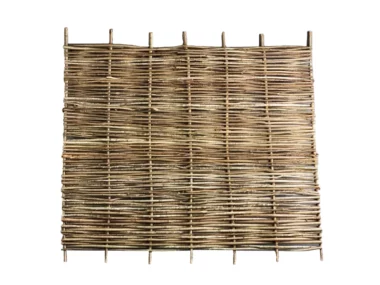
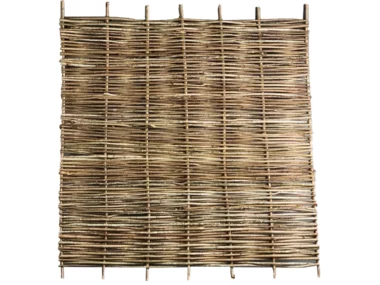
Where willow is a deep red-brown and closely woven, hazel is silver-grey: thicker in the rod, looser and more rustic in the weave, with the uprights left standing proud top and bottom.
Every panel is handwoven from coppiced hazel, so no two come out the same. They arrive ready to fix to posts, in six heights, all a standard 1.83m (6ft) wide.
Showing all 6 results
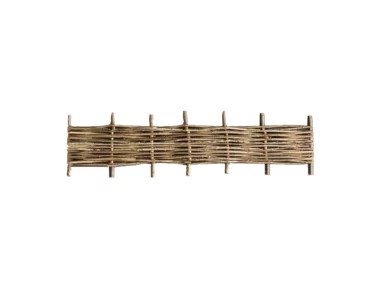
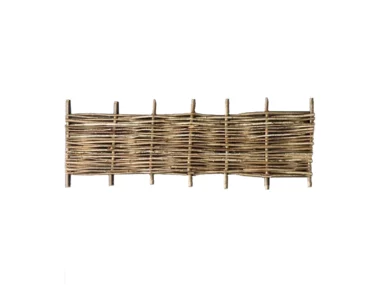
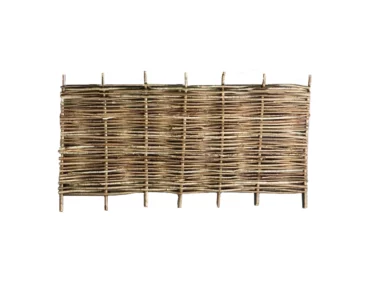
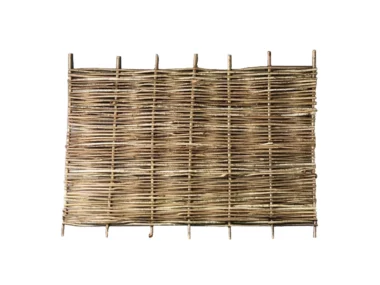
Choosing your height
| Height | Best for | Price |
|---|---|---|
| 1ft × 6ft | Edging gravel, paths and raised beds | £27.49 |
| 2ft × 6ft | Holding a line without blocking a view | £31.76 |
| 3ft × 6ft | Vegetable plots and front gardens | £32.25 |
| 4ft × 6ft | Hiding bins, oil tanks and compost | £38.37 |
| 5ft × 6ft | Privacy round a seating area | £45.90 |
| 6ft × 6ft | Full-height boundaries and windbreaks | £53.92 |
Screening is judged sitting down, not standing up. Sit where you want privacy, have someone hold a cane on the fence line, and mark where the view goes. Nine times in ten it lands near 5ft, which is why the 5ft panel is the one we send out most.
Hazel or willow?
Both are coppiced, handwoven, fixed the same way and good for five to ten years. What separates them is colour and the weight of the weave.
Hazel
Silver-grey, with olive and honey in it. Cut November to March while the sap is down, then rived by hand and woven green, so the panel tightens on itself as it dries. Thick rods, an open weave, uprights left proud top and bottom — woven hazel fencing for cottage gardens and older plots.
Willow
A warm red-brown, russet to oxblood as the light moves. Finer rods, a closer weave, a panel that reads as a colour in its own right — it lifts a dark corner where hazel would step back.
Neither is better: choose hazel when you want the boundary to go quiet, willow when you want to see it. And both do what a solid fence cannot. An open weave filters wind instead of taking the full load of it, so hurdles ride out gales that flatten close-board, and planting behind them gets shelter rather than turbulence.
We compare the two properly — colour, weave, privacy, price and lifespan — in our guide to choosing between hazel and willow.
Fitting them
Hazel hurdles are fixed to the face of a round post, not slotted into it, so a run can follow a curve or a slope with no cutting. We supply pointed machine round fence posts, pressure treated to UC4 for ground contact: the 1.8m post for panels up to 4ft, the 2.4m post for 5ft and 6ft.
Count posts first: one per 6ft panel plus one to finish the run, so three panels need four. Drive them into firm ground; on sand, wet clay or an exposed coastal site, concrete them and let them set.
Each hurdle then goes on with stainless steel cable ties: four to every upright, eight on a 6ft × 6ft panel, threaded through the weave and drawn tight round the post. Fifty to a pack covers six full-height panels. Galvanised wire hardens at the twist and snaps, and screws split the uprights — ties hold firm and still let the panel move in a gale.
The sequence is photographed in our guide to installing hazel and willow hurdles.
How long do hazel hurdles last?
Reckon on five to ten years in an ordinary British garden. Where yours lands comes down to water: hazel goes up green, with nothing painted on it, and survives by drying out between downpours. Given moving air it reaches the top of that range; stood in wet soil it will not.
- Lift it clear of the ground. An inch of daylight under the bottom uprights buys more years than any treatment.
- Leave both faces open. Never back one onto a solid fence or let ivy smother it: a weave that cannot dry rots from the inside.
- Re-tighten the ties each spring. Hazel shrinks as it seasons, and a tight weave does not shake itself apart.
Treatment is optional and most people skip it, letting the panels weather to a paler grey. To slow that, a clear breathable oil in late summer is plenty; never varnish, which traps damp in the rods. More in our guide to treating hazel hurdles.
Delivery
£14.99 flat, one panel or twenty, anywhere on the UK mainland. Every height is in stock and packed to travel — these are made by hand and should arrive looking like it.
New to these? Our guides explain hurdle fencing from the ground up, what people mean by woven fence panels, and how to work out the right height for garden screening.