 Phone orders on 0208 088 2269/ £14.99 delivery for all orders

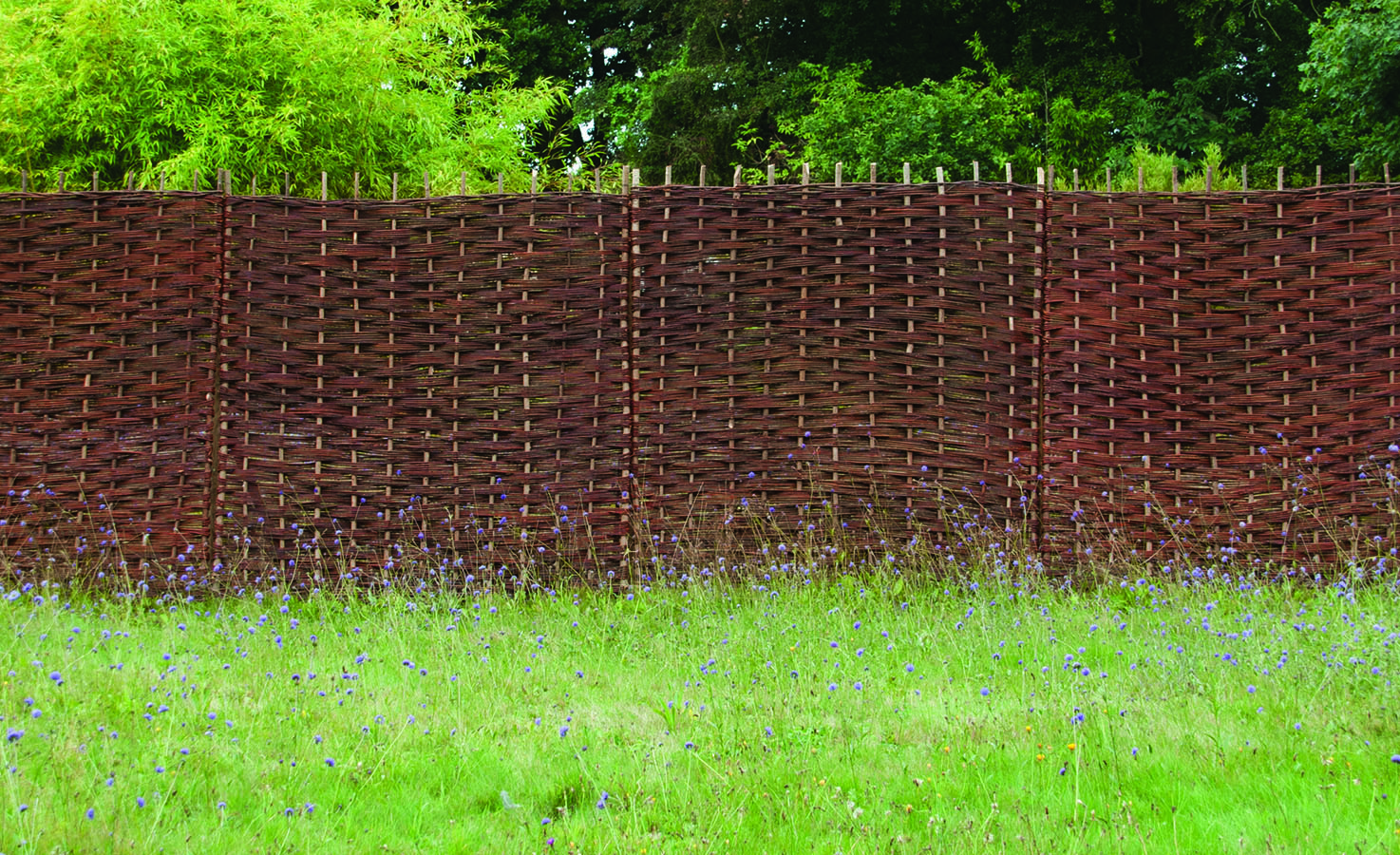

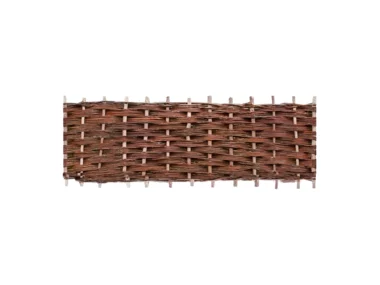
At 120cm a willow hurdle stops being an edge and becomes architecture. Sit down behind one and you have a private corner; stand up and the garden is whole again. It is the height that turns a plot into a series of places rather than one open rectangle, and willow’s close even weave gives that division real warmth.
Around a patio or a dining table it takes the edge off both the wind and the neighbours. Across the width of a long garden it creates a threshold — a reason to walk through — and long thin plots always look better broken up than left open. On a boundary it gives useful privacy from anyone seated next door while still letting the sun onto your border, which a solid four-foot panel would partly deny you.
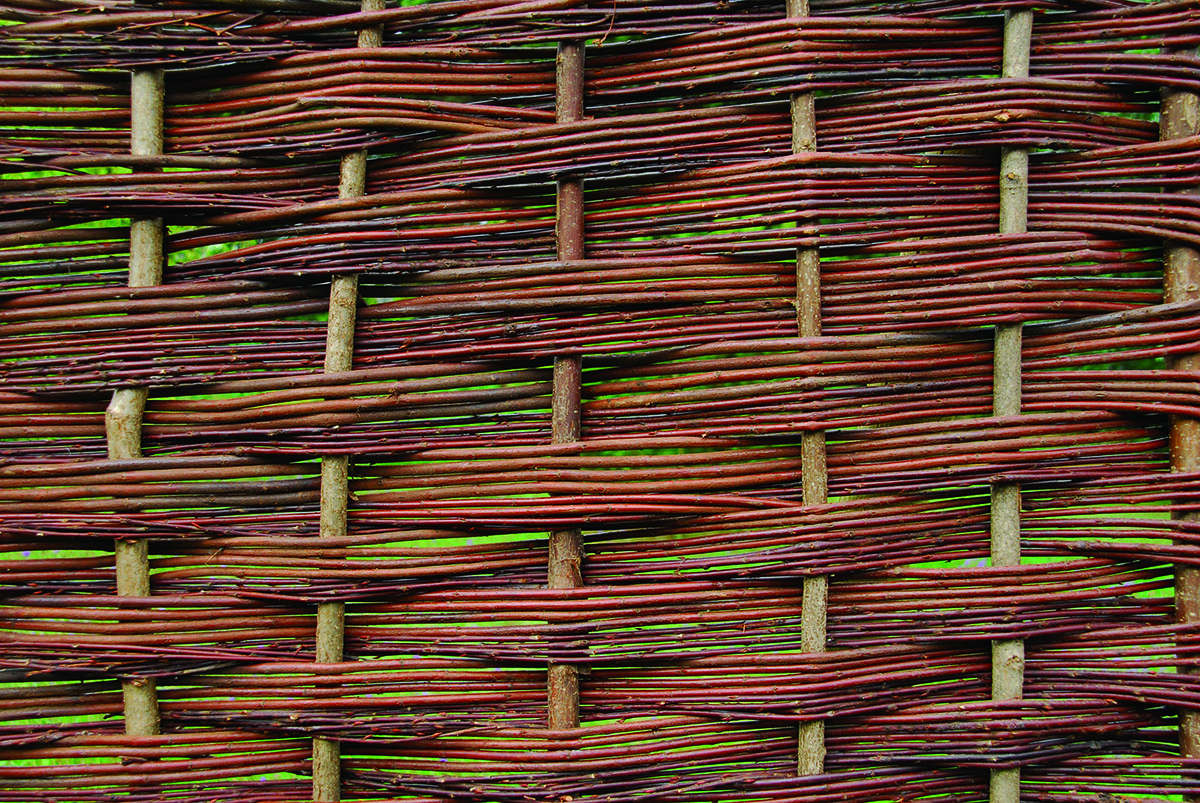
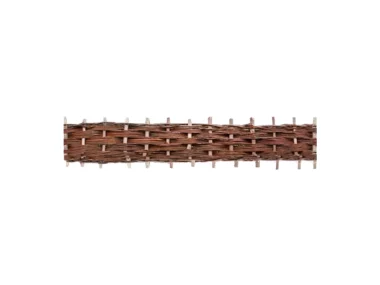
The colour is russet to oxblood depending on the light, and it holds that warmth rather than bleaching out. There is no good side and bad side — it presents the same finished face to you and to your neighbour. For a boundary meant to disappear instead, see our hazel hurdles in silvery grey-brown.
Fitting at this height
Four feet is the last height that takes the shorter post. The open structure matters here: wind passes through and is broken up rather than slamming into a flat face, so the panel takes far less load than a solid fence and the planting behind gets shelter instead of turbulence. If your run will take real physical knocks — livestock, machinery, a busy dog — hazel is the sturdier material. For looks, willow.
Fitting. Four feet is the last height on 1.8m pointed UC4 posts. Allow 60cm in the ground and concrete on anything soft, sandy or exposed — at this height the panel begins to take proper wind.
Four stainless steel cable ties to each upright, eight per panel, pulled tight against the post so nothing shifts in a gale.
Reviews
There are no reviews yet.