 Phone orders on 0208 088 2269/ £14.99 delivery for all orders
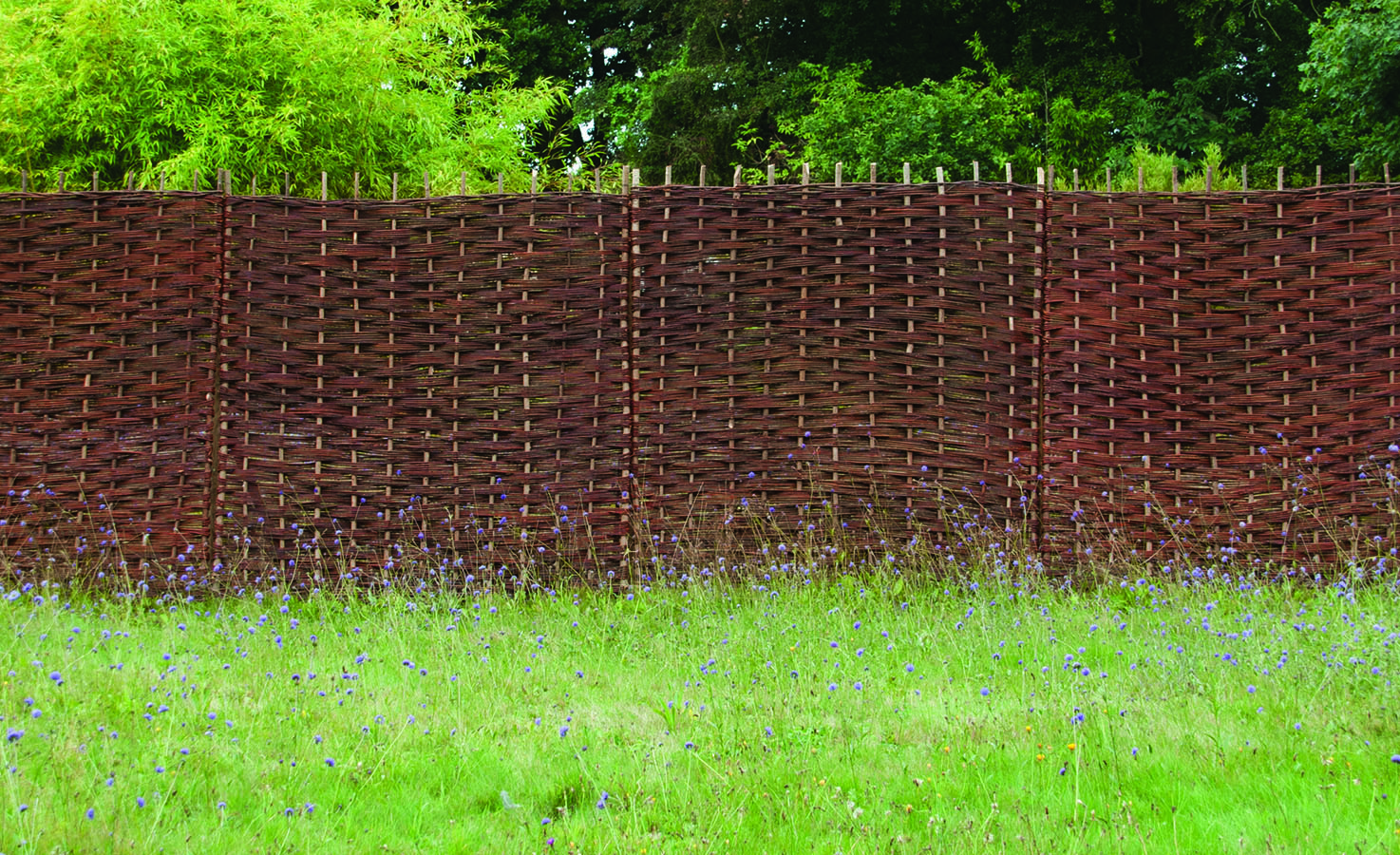
Buy one willow panel and you will almost certainly buy another. Not because the first one failed, but because once there is a run of red-brown weave along one edge of a garden, every other edge starts to look unfinished. It is the most common conversation we have on the phone: someone ordered three for the bins, and now they want nine.
Which makes choosing the height the decision worth getting right first time. There are six, they all do genuinely different jobs, and the difference between the right one and the nearly-right one is the difference between a fence you stop noticing and a fence you keep meaning to replace.
What willow actually looks like
Willow is deep red-brown — russet in flat light, closer to oxblood when the sun comes round and finds the weave. It is worth being specific about this because a lot of people arrive expecting something pale, and willow is not pale. It is the warmest material we sell, and it holds that colour rather than bleaching out in a season.
The rods are slim and the weave is close and even, which gives a finer, more regular surface than hazel — hazel being the silvery grey-brown one, thicker in the rod and looser in the weave. Willow adds colour to a garden. Hazel takes it away. Neither is better; they are answers to different questions.
Every panel is handwoven from coppiced willow, so no two are identical. All six heights are a standard 1.83m (6ft) wide.
The six heights, and what each one is for
| Height | Best for | Price |
|---|---|---|
| 1ft × 6ft | Edging beds, borders and gravel paths | £28.99 |
| 2ft × 6ft | Low definition between planting areas | £29.79 |
| 3ft × 6ft | Boundaries you still want to see over | £30.30 |
| 4ft × 6ft | Screening patios and seating areas | £36.65 |
| 5ft × 6ft | Privacy without enclosing the garden | £46.41 |
| 6ft × 6ft | Full-height boundary screening | £54.16 |
One foot is edging, and it is the size people underestimate. A 30cm run of willow along the front of a border holds soil and mulch where you put them and turns a vague edge into a deliberate one. Low enough to step over, and it will not shade a single plant.
Two foot starts to mark territory. It stops feet and paws taking shortcuts, holds a bed firmly, and along the front of a house it changes the whole frontage without walling anything off.
Three foot is the classic garden boundary — waist height, low enough to lean on and talk over. It contains chickens, discourages dogs, separates a kitchen garden from a lawn convincingly, and never makes a small garden feel smaller because you can still read the depth beyond it.
Four foot is where a fence becomes a room. Sit down behind one and the world on the other side politely disappears; stand up and you have the whole garden back. Across the width of a long thin plot it creates a threshold and a reason to walk through, which is the cheapest way to make a narrow garden feel considered.
Five foot is the height most people skip and then wish they hadn’t. Everyone jumps from four to six, and six is often too much — it casts a real shadow and encloses you. At 150cm the bins, the oil tank, the compost bay and the heat pump all disappear, and you keep the morning light on the border along its foot.
Six foot is a complete boundary. Genuine standing-height privacy from a path, a road or an upstairs window, delivered with texture instead of a blank face. Currently made to order rather than off the shelf.
If you want the short version: four foot to soften a view, five or six to stop one. Below three foot is decorative — beautiful, but it will not hide anything.
How long do willow fence panels last?
Five to ten years in an ordinary British garden. The spread is wide because the conditions are, and where yours lands is almost entirely about water.
Willow goes up green, with nothing painted on it, and survives by drying out between downpours. Give it moving air on both sides and an inch or two of clearance under the bottom rail and it will reach the top of that range. Stand it in wet soil, flat against a north-facing wall or jammed into a dense hedge, and it will not.
Three things extend it more than anything else. Keep the bottom off the soil. Fix at four points per upright rather than two, because movement is what breaks a weave. And check the ties once each spring — a two-minute job that stops a panel working itself loose over winter.
Yes, that is shorter than a pressure-treated close-board fence. What you get in exchange is a panel that costs less to start with, looks better every year rather than worse, has no bad side to argue about, and comes from a coppice cycle that regrows rather than a plantation that gets felled.
How do you fix willow fence panels to posts?
With stainless steel cable ties — four to each upright, so eight on a 6ft × 6ft panel, threaded through the weave and pulled tight against the post.
Not galvanised wire, which hardens where you twist it and eventually snaps. Not screws, which split the uprights and leave the panel nowhere to move when the wind gets underneath it. A stainless tie holds firm and still allows the small amount of movement a woven panel needs. They come fifty to a pack, which covers six full-height panels.
Panels fix to the face of a round post rather than slotting into a slot, which means a run can follow a curve or a slope with no cutting at all. Use our pointed machine round posts, pressure treated to UC4 for permanent ground contact: the 1.8m post for panels up to 4ft, the 2.4m post for 5ft and 6ft.
Count posts before you order: one per 6ft panel plus one to finish the run, so four panels need five posts. Drive them into firm ground; on sand, wet clay or an exposed coastal site, concrete them and let them set. The full sequence is photographed in our guide to installing hazel and willow hurdles.
Is willow fencing expensive?
A 6ft × 6ft willow panel is £54.16, so a 30ft run of full-height fencing is five panels and six posts — around £362 including the posts and a pack of ties. That is more than the cheapest lap panel on a builders’ merchant forecourt and less than most decorative screening.
The number that actually matters is what happens in a gale. A solid six-foot fence is a sail: it takes the full force of the gust, and either the panel goes or the post snaps. A woven panel lets the wind through and breaks it up, so it carries a fraction of the load. It also means the planting behind it gets shelter rather than the hard downdraught that lands a few feet behind solid board and flattens whatever you put there. Growers have used woven hurdles as windbreaks for centuries for exactly that reason.
Willow or hazel?
Both are coppiced, both handwoven, both fixed the same way, both good for five to ten years. The difference is colour and the weight of the weave.
Willow
A deep red-brown, russet to oxblood. Slim rods, close even weave. Choose it when you want the fence to bring warmth and lift a dark corner.
Hazel
A soft silver-grey with olive and honey in it. Thicker rods, a looser rustic weave. Choose it when you want the boundary to go quiet behind planting.
Plenty of gardens use both: hazel on the long boundary where it should disappear, willow around the seating area where you actually look at it.
Still weighing it up? Our full comparison covers how to choose between hazel and willow — colour, weave, privacy, price and how long each lasts.
Delivery
£14.99 on every order, whatever the size, across the UK mainland. Panels are packed so they arrive as they left — handwoven work does not survive being thrown about.
Browse the full range of willow fence panels, or if the silver-grey is more your garden, the hazel hurdles come in the same six heights.
Not sure a panel is the right answer? Our garden screening guide starts from the problem instead, and woven fence panels compares the woven approach with ordinary lap and close-board fencing.