 Phone orders on 0208 088 2269/ £14.99 delivery for all orders
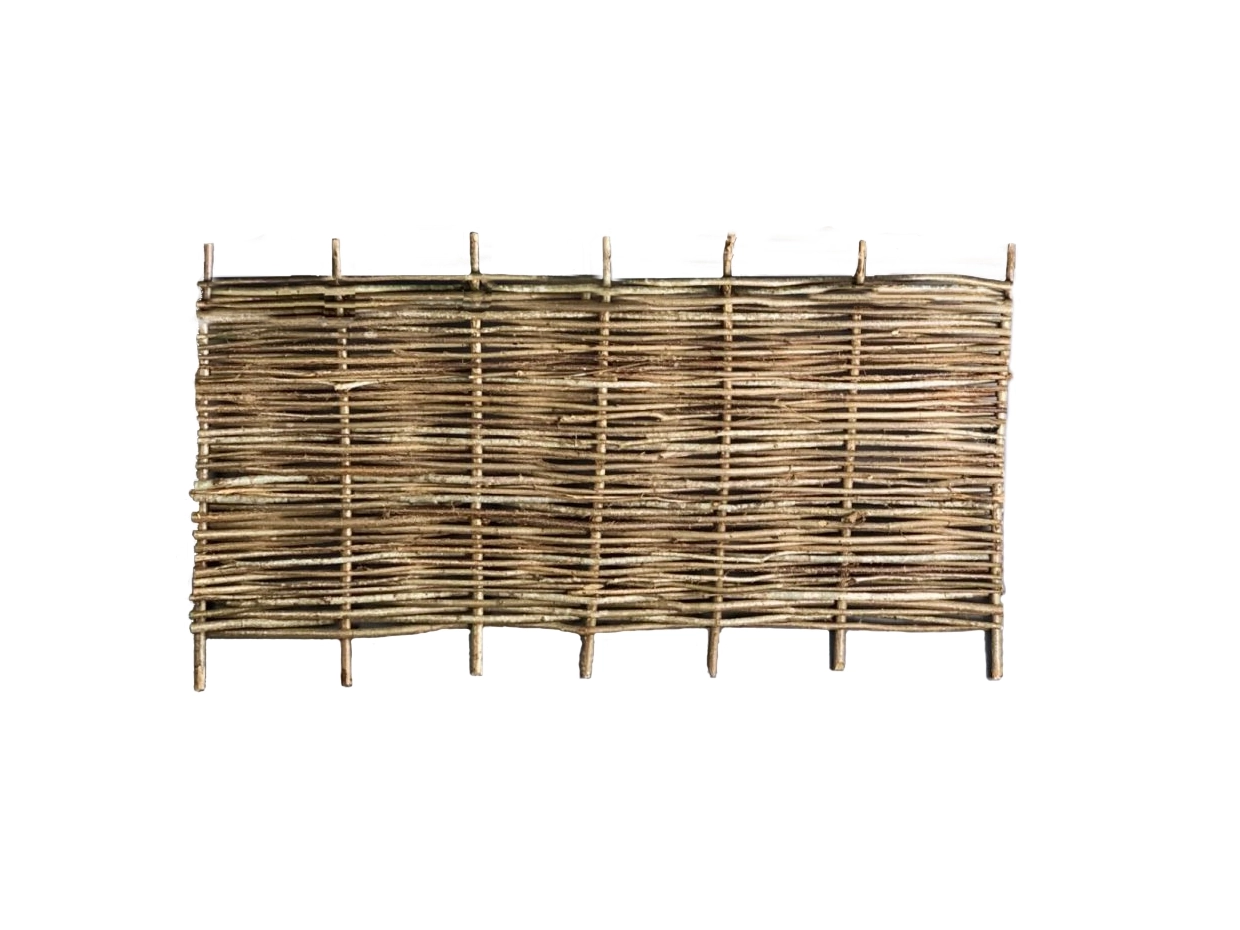
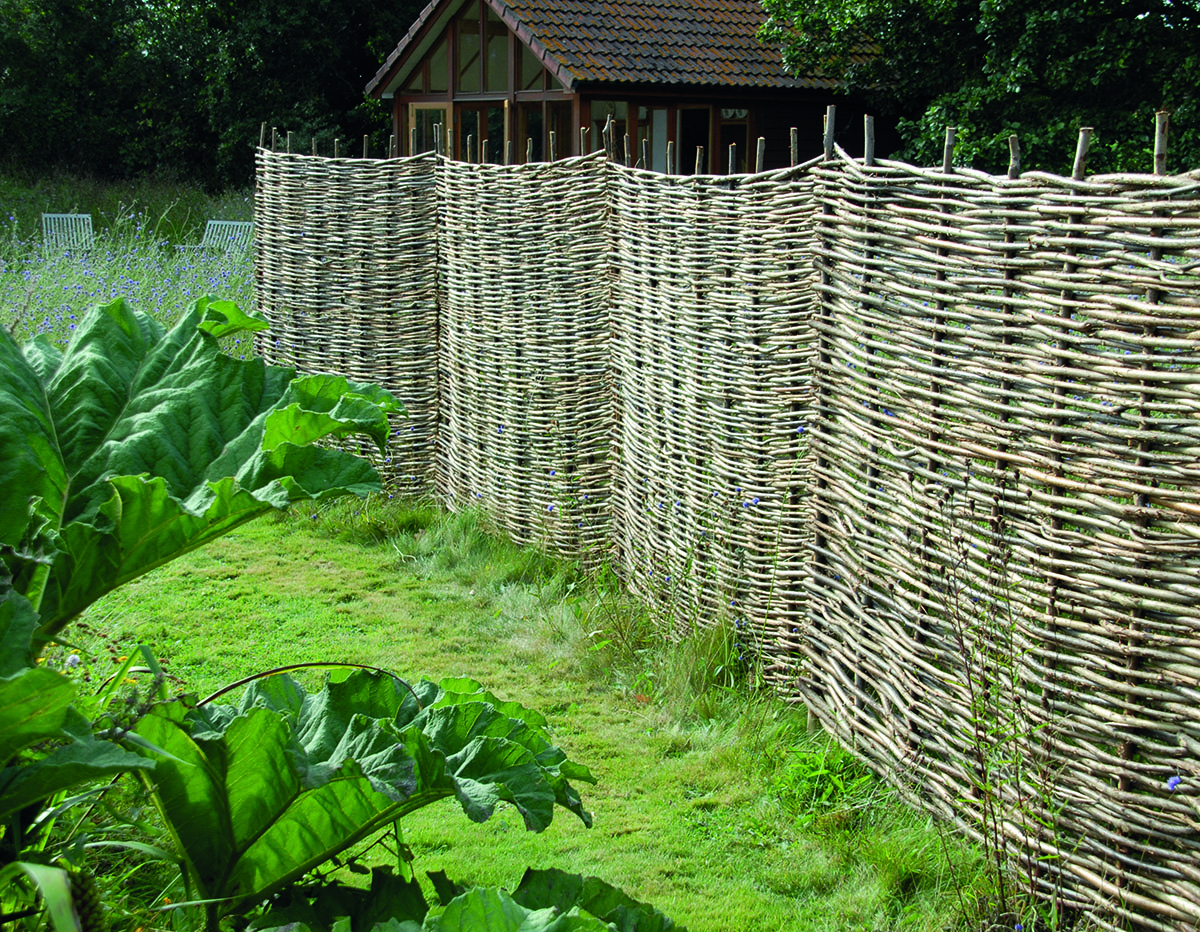


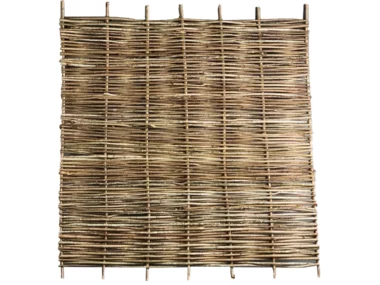
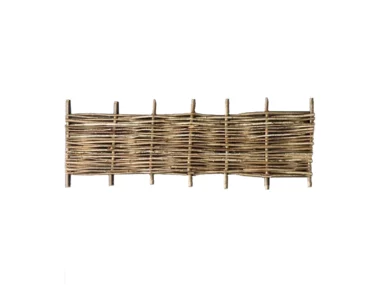
If you have ever walked through a village in Dorset or Sussex and thought the gardens looked right in a way you couldn’t quite name, this is the height you were looking at. Three feet is the traditional cottage garden boundary — waist high, woven from hazel, low enough to lean on while you talk to whoever is passing. It is the panel we sell most of, and the one people come back for.
Ninety centimetres does real work. It shelters a border from the worst of the wind while letting light and air straight through. It separates a kitchen garden from a lawn convincingly enough that both feel like proper rooms. It contains chickens, discourages dogs, and stops delivery drivers cutting the corner. And unlike a solid panel at the same height it never makes a small garden feel smaller, because you can still read the depth of the space beyond it.
The colour is a soft silvery grey-brown — olive and honey in the rods, paling as it weathers. Green planting in front of a hazel hurdle is what you see; the fence is not competing. Our willow hurdles do the opposite, in a deep red-brown.
Why a hurdle beats a solid panel in wind
Where close-board catches a gust and either lifts or drops it in a damaging swirl on the far side, a hurdle filters it. The gust passes through and breaks up, so the panel takes a fraction of the load and your plants get shelter rather than turbulence. Growers have used woven hurdles as windbreaks for centuries for exactly this reason.
Fitting. Because the panel ties to the face of a 1.8m pointed UC4 posts rather than slotting into it, a three-foot run can follow a curve or climb a slope with no cutting at all. One post per 6ft, plus one to close the run.
Four stainless steel cable ties to every upright — eight on a panel this size. Fifty to a pack covers six. The whole sequence is photographed in our fitting guide.
Reviews
There are no reviews yet.