 Phone orders on 0208 088 2269/ £14.99 delivery for all orders
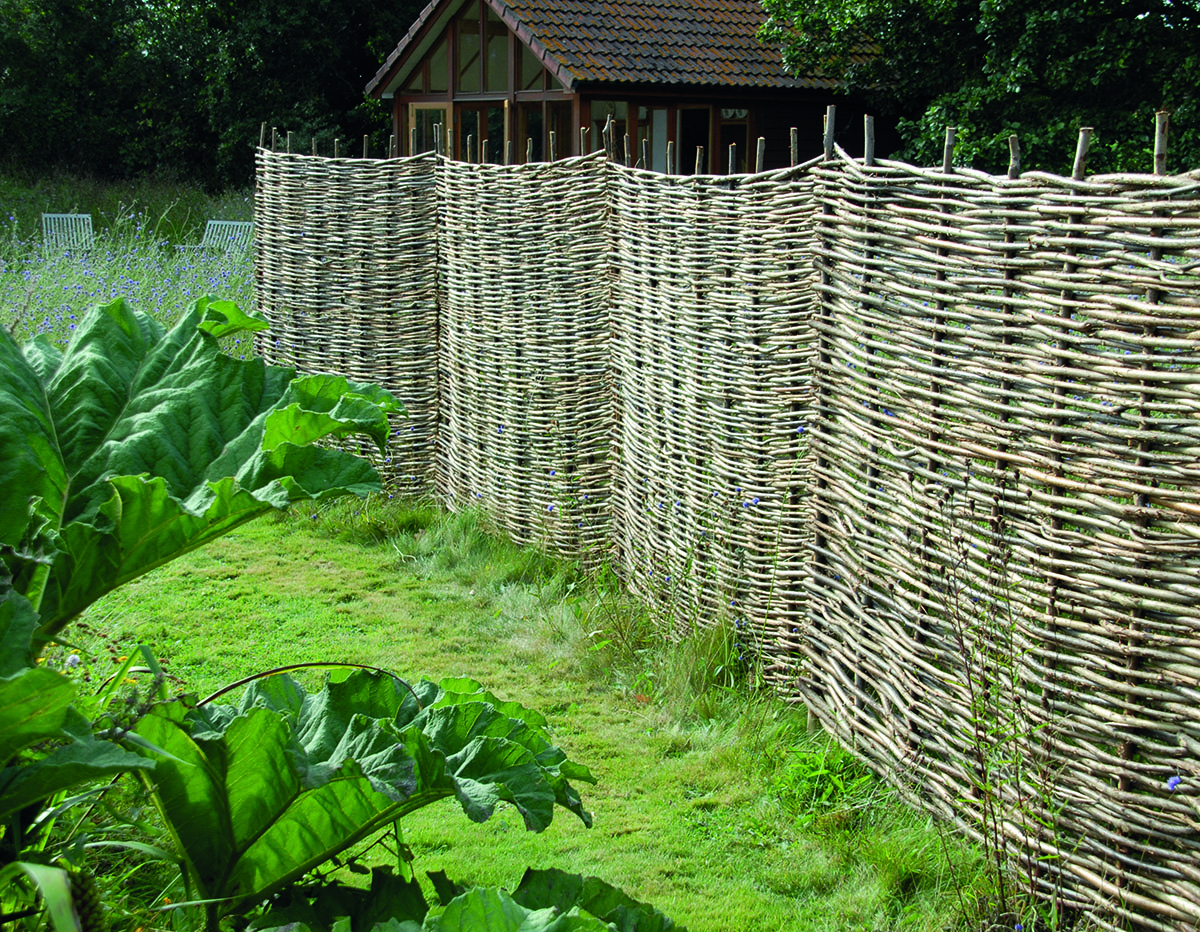
Hazel screening is not a solid barrier and was never meant to be. It is a woven panel of thick coppiced rods with daylight visible between them, and if you understand that before you buy, you will be pleased with it for years. If you are expecting a wall, you will not. So here is what hazel actually screens, what it does not, and where it beats every alternative.
What a hazel screen looks like up close
Hazel is soft silver-grey, with olive and honey running through it. The rods are thick — noticeably thicker than willow — and the weave is deliberately loose, so you read the individual rods rather than the panel as a whole. There are gaps. You can see light through it standing a foot away.
Step back six feet and that changes completely. The eye stops resolving the gaps and the panel reads as a surface. This is the single most common surprise: people judge a hazel screen from the distance they unpack it at, not the distance they will actually live with it from.
The honest comparison: willow fence panels screen slightly better than hazel at the same height, because willow rods are slimmer and sit tighter together. If maximum privacy is the only thing that matters, willow is the better buy.
What hazel gives you instead is substance. Thicker rods make it the more robust panel, and the looser, more rustic weave is what makes it look right against old brick, gravel and stone where a tight weave can look almost too neat.
Height does the work, not the material
The difference between hazel and willow at the same height is small. The difference between 4ft and 6ft is enormous. A 6ft hazel panel screens vastly better than a 5ft willow one, so settle the height first and choose the material on looks.
| Height | What hazel screening does at that height |
|---|---|
| 3ft | Defines a space. Screens nothing — you see straight over it |
| 4ft | Hides objects: bins, a compost heap, an oil tank. Clears eye level when seated |
| 5ft | Privacy for a seating area without enclosing the whole garden |
| 6ft | Full-height boundary screening. The only one that hides a standing adult |
Our garden screening guide works backwards from what you are trying to hide, including why no fence of any height defeats an upstairs window.
Why the gaps are a feature
The open weave is not a compromise on a solid panel. It is the reason hazel survives where solid fencing does not.
A solid screen behaves like a sail. Wind hits it, has nowhere to go, and the whole load ends up in the post at ground level — which is why runs of lap panels come down in a storm while the hedge beside them is untouched. A hazel screen bleeds air through the gaps and simply stands there.
There is a second benefit that matters more than people expect. Because a solid fence creates turbulence that drops back down behind it, the genuinely sheltered area behind one is smaller than it looks. A permeable screen slows the air across the whole depth of the garden instead. That is why market gardeners used hurdles as windbreaks for centuries before anyone bought one for the look of it.
And it means planting close to hazel screening does well. Light and air still reach the border behind it, which is not true of a 6ft close-board panel on the south side of a bed.
How hazel screening ages
It silvers. The greys deepen and the honey tones fade, and by year three or four a hazel screen reads as properly grey rather than fresh-cut. Most people prefer it — it stops looking like a new fence and starts looking like part of the garden.
That is the opposite of willow, which keeps its warmth: willow softens from red-brown to a dustier version of the same colour but never turns grey. If you want the screen to disappear into a planting scheme, hazel is the one that recedes.
Expect five to ten years. Where you land in that range depends almost entirely on three habits, none of which cost anything: keep the bottom edge clear of soil, fix at four points per upright rather than two, and check the ties each spring. Full detail in how long hazel hurdles last.
Panels, not rolls
Plenty of people searching for hazel screening are picturing a roll — thin brushwood on wire, unrolled against an existing fence. We do not make those, and it is worth being clear why rather than pretending.
A roll is a covering. It hides something that already stands up, cheaply, for a couple of seasons before the wire shows and the edges fray. If you have a sound fence you are not ready to replace, a roll is genuinely the sensible buy.
A panel is a structure. Whole rods woven around uprights into something rigid that stands on its own posts and needs nothing behind it. More money at the start, five to ten years in return, and it looks made rather than wrapped.
Where hazel screening suits best
After enough of these conversations the pattern is clear. Hazel goes where you want the boundary to recede: cottage and country gardens, older houses, allotments and kitchen gardens, gravel paths, stone walls, anywhere the fence should not be the thing you notice.
It is also the one to choose where the screen will take wear — a run beside a path people brush past, a boundary with livestock the other side, a working plot rather than an ornamental one. Those thicker rods are the reason hazel was penning sheep for centuries.
Where willow tends to win is the opposite case: courtyards, contemporary planting, red brick, a patio screen that will be looked at from three feet away. Hazel or willow compares the two properly, including the fact they cost within about £2 a panel of each other.
Common questions
Does hazel screening give full privacy?
At 6ft, near enough from a few feet back. Up close you will see daylight through the weave, because the gaps are what make it wind-permeable. If total privacy at the shortest distance is the priority, willow’s tighter weave is marginally better — but height matters far more than material.
How high can hazel screening go?
Ours goes to 6ft, all panels 6ft wide. That is inside the 2-metre permitted height for a rear or side boundary in England and Wales, so no planning permission is needed. Front boundaries adjoining a road are limited to 1 metre.
Do you sell hazel screening rolls?
No — woven panels only. If a roll is genuinely what your job needs, we would rather tell you that than sell you the wrong thing.
Can I fix hazel screening to an existing fence?
Hazel panels are self-supporting and want their own posts. If you have a sound post line and only want to cover tired panels, a roll is the better answer. If the fence itself is failing, replace it properly rather than screening the problem.
Will plants grow against hazel screening?
Yes, and better than against solid fencing, because light and air still get through. Climbers can be tied straight to the weave with the same stainless ties you fixed the panel with. Just keep foliage off the bottom rail so the base can dry out.
Does hazel screening need treating?
No, and we would rather you did not. These are untreated coppiced rods, and surface stains trap moisture inside the weave. Clearance underneath and firm fixings do far more good than any product.
Working out what you need
Measure the run, divide by six for panels, and add one for the post count — four panels need five posts. Then pick the height from the table above. Browse the full range of hazel fence panels, see what a complete run costs, or tell us what you are screening and we will work it out with you.