 Phone orders on 0208 088 2269/ £14.99 delivery for all orders
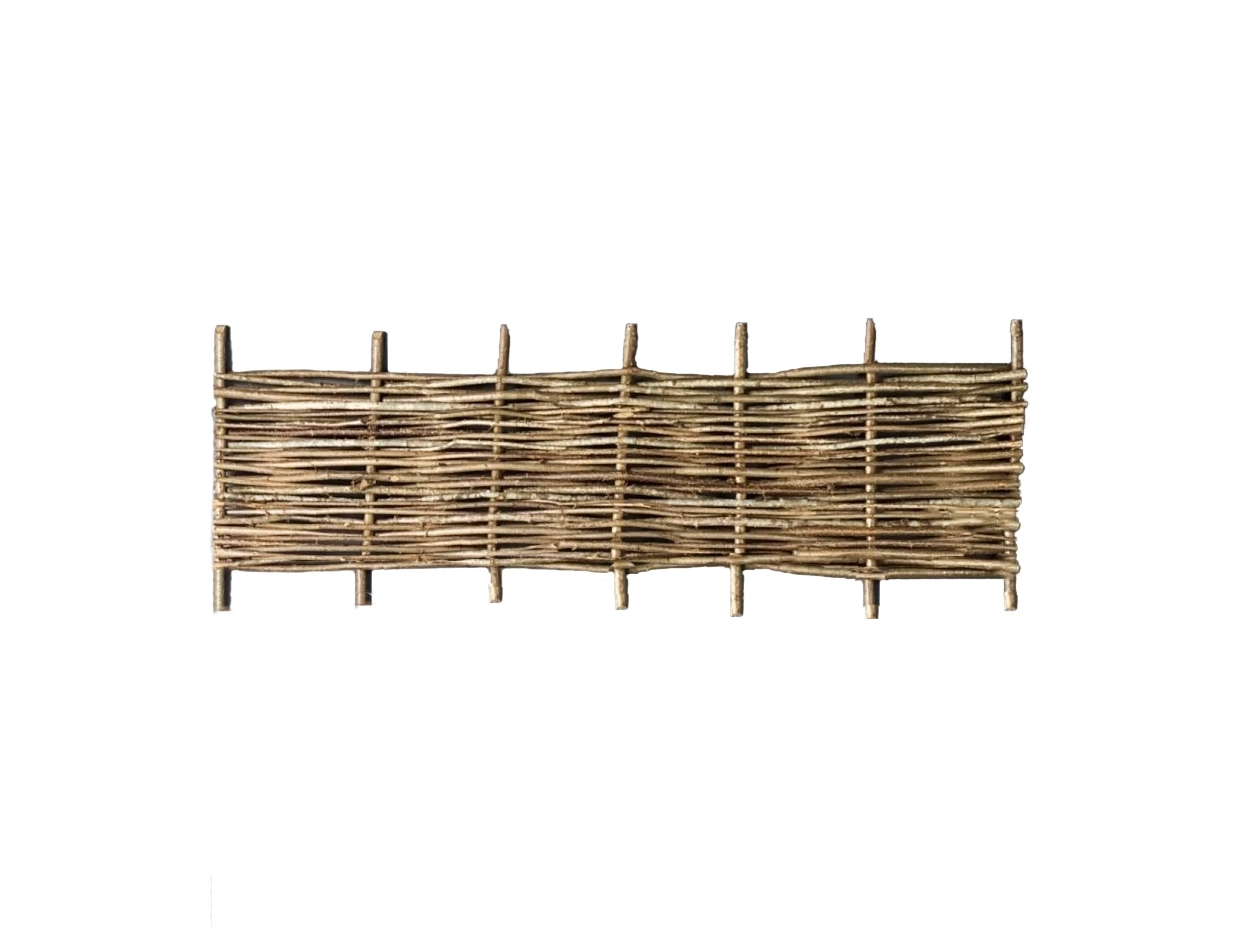


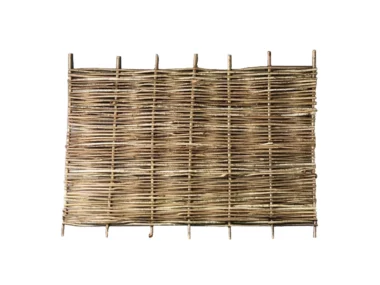
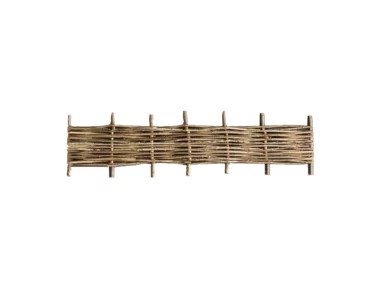
There is a particular height at which a fence stops being decoration and starts being a boundary, and for most gardens it is around two feet. Below it, people and dogs simply walk through. Above it, you begin to lose the view. At 60cm this hazel hurdle sits exactly on that line — it tells everyone where the garden ends without shutting the garden in.
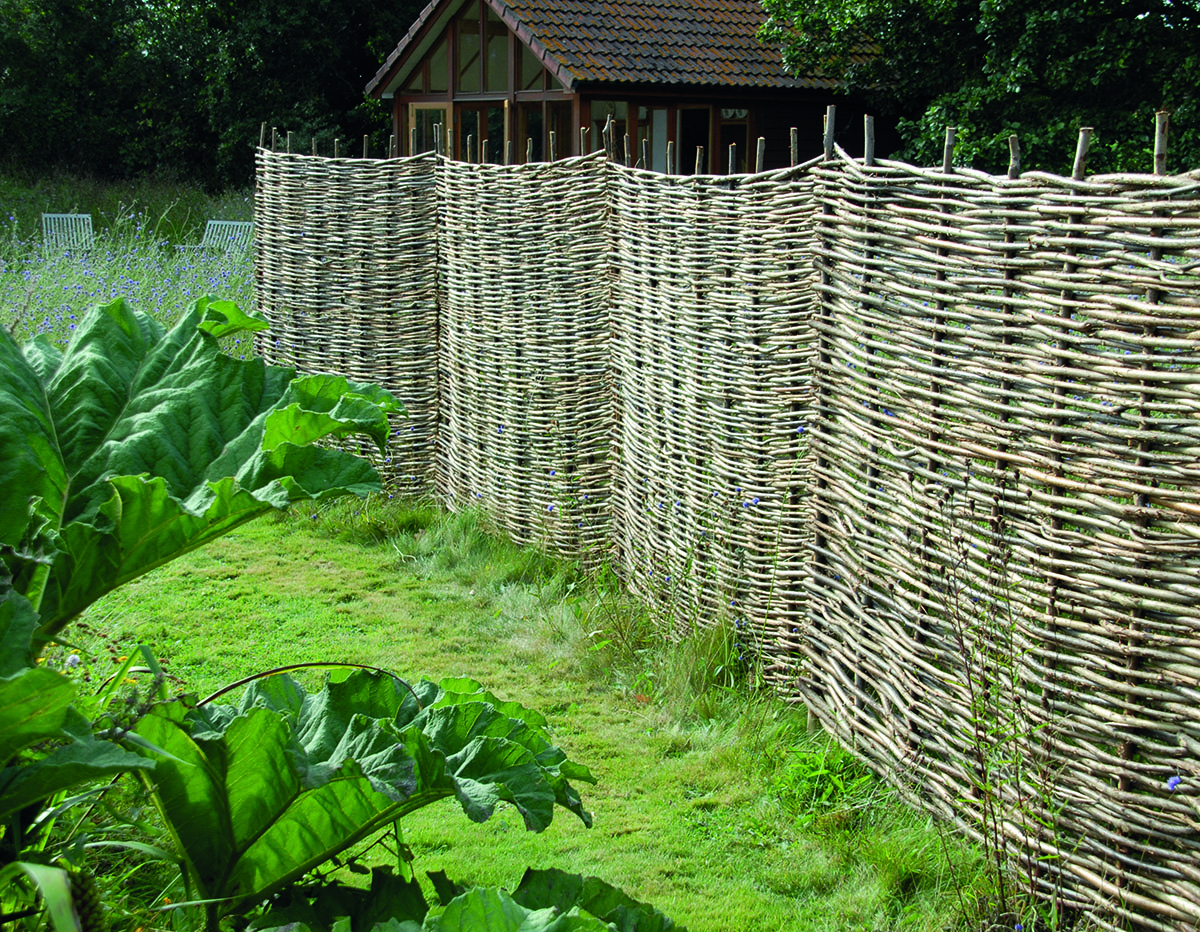
It is the natural choice for a front garden. A run of woven hazel along a low wall, or straight into the ground, gives a house a settled frontage that no amount of orange softwood will imitate. Round the back it earns its keep dividing a mown lawn from a wildflower patch, screening a compost heap at seated eye level, or fencing a herb bed so the dog takes the long way round.
Hazel is a soft silvery grey-brown with olive and honey in the rods, and it pales as it weathers. It is a colour that steps back behind planting, which is why designers reach for it. For a fence that brings colour instead, see our willow hurdles in the same six heights.
How it is made
Each panel is woven by hand from coppiced hazel — rods cut in winter when the sap is down, split and worked around upright sails while still green enough to bend. That is why the weave holds: it isn’t nailed together, it is tensioned against itself. It is also why hazel hurdles flex in a gale instead of taking off across next door’s lawn. Browse the full hazel range for the other five heights.
Fitting. 1.8m pointed UC4 posts, one at each end of the run and one at every 6ft join, so a four-panel run needs five. Drive them on firm ground; on wet clay or sand, concrete them.
Fix with four stainless steel cable ties per upright, eight per panel, fed through the weave and pulled hard against the post. Not wire, which hardens where you twist it and snaps; not screws, which split the uprights.
Reviews
There are no reviews yet.