 Phone orders on 0208 088 2269/ £14.99 delivery for all orders
Fence Posts
A hurdle fence stands or falls on its posts. The panel catches the wind; the post has to hold it there, and keep doing that while standing in wet ground for ten years.
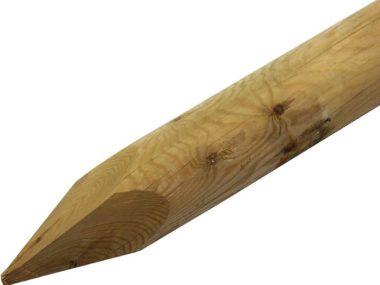
We stock two lengths, and between them they cover every panel we sell. Both are machine-rounded to a true 100mm, chamfered at the top so rain runs off, and pointed at the base so they drive straight.
Both are UC4 pressure treated — the rating for timber in permanent ground contact, not the lighter green treatment used on rails and decking. Use the 1.8m for panels up to 4ft, the 2.4m for 5ft and 6ft.
Showing all 2 results
Which post do I need?
Work back from the panel: about 60cm in the ground, the rest standing to meet the top of the weave.
| Panel height | Post to use | Price |
|---|---|---|
| 1ft & 2ft | 1.8m × 100mm UC4 — cut down, or set deeper | £13.74 |
| 3ft & 4ft | 1.8m × 100mm UC4 | £13.74 |
| 5ft | 2.4m × 100mm UC4 | £15.22 |
| 6ft | 2.4m × 100mm UC4 | £15.22 |
You always need one more post than you have panels. One at each end of the run and one at every 6ft join — so four panels take five posts, and ten panels take eleven. It is the most common thing people get wrong on a first order.
What does UC4 actually mean?
Use Class 4 is the rating for timber in permanent ground contact — wood buried in soil, where it stays damp and where the fungi that rot timber live. Not a marketing word — a specification, and it changes how the post is treated.
The green stuff on rails and decking is UC3: fine for timber that sits in the air and dries between showers. UC4 gets a longer cycle at higher pressure, so preservative is driven deep into the sapwood instead of sitting near the surface. Put a UC3 post in wet clay and you will be digging it out in four or five years, snapped off at ground level — which is where posts fail, at the soil line where wet meets air.
1.8m × 100mm — £13.74
For panels from 1ft to 4ft. Sixty centimetres in the ground leaves 1.2m standing — exactly a 4ft hurdle. On shorter panels, set the post deeper or take the top off with a saw and treat the cut.
2.4m × 100mm — £15.22
For 5ft and 6ft panels. Sixty centimetres down leaves 1.8m standing. A full 6ft panel is 1.83m, so the post finishes a whisker below the top of the weave — nobody notices. Want it dead flush? Set it an inch shallower and concrete it.
Setting them
- Run a string line first. Posts that wander are obvious from thirty feet away, and no amount of good weaving hides it.
- Mark each post off the panel, not the tape. Handwoven hurdles vary by an inch or two, so trust the panel in your hands.
- Get 60cm in the ground. Drive them with a knocker and cap on firm ground; concrete them on soft, exposed or coastal sites, sloping the collar so water runs off the timber.
- Check plumb and level the tops before you fix anything. Adjusting a post takes a minute. Adjusting a post with four panels tied to it takes an afternoon.
- Fix the panels with stainless steel cable ties — four to each upright, eight per 6ft × 6ft panel. Never wire, which kinks and rusts through, and never screws, which split the upright.
Photographs of the whole job are in our hurdle fitting guide. Once the posts are in, the silver-grey hazel and red-brown willow panels go up in an evening.
Delivery
£14.99 flat on every order, UK mainland, however many posts you buy. Posts and cable ties travel with your panels, so order everything together and pay it once.
New to these? Our guides explain hurdle fencing from the ground up, what people mean by woven fence panels, and how to work out the right height for garden screening.