 Phone orders on 0208 088 2269/ £14.99 delivery for all orders
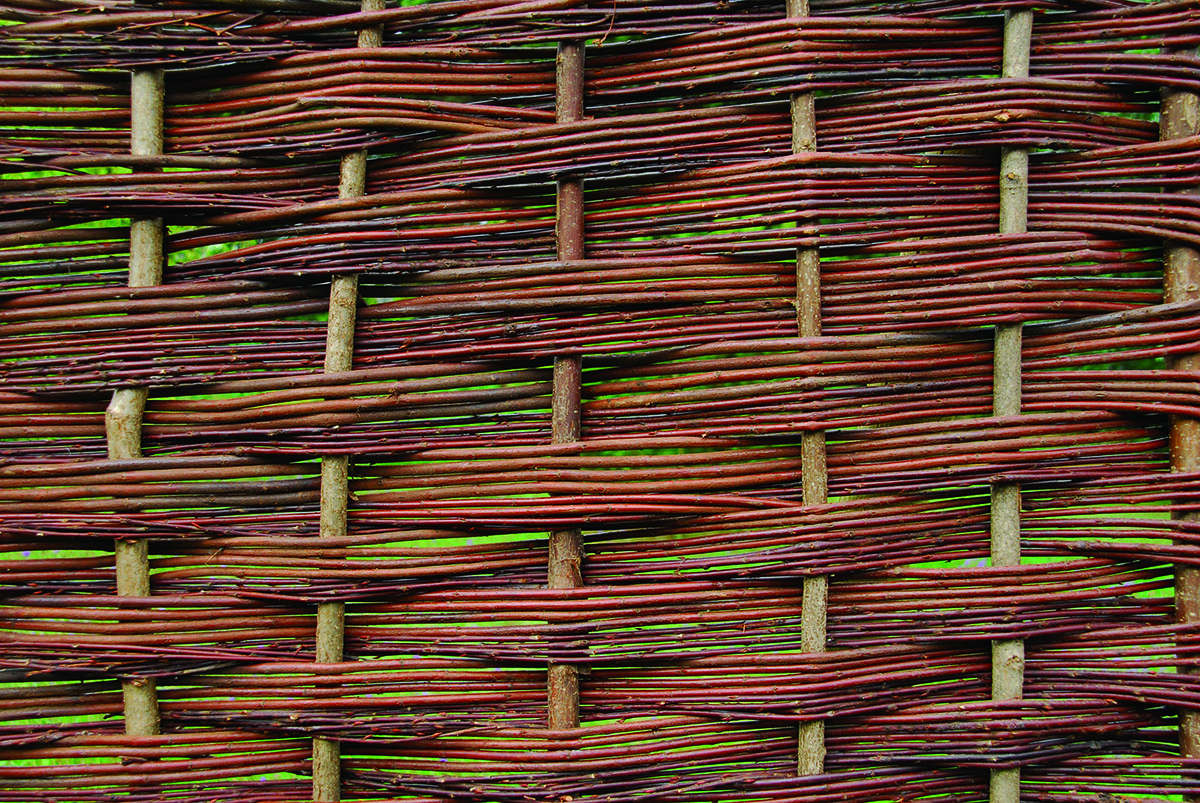
The morning after a proper gale is the best time to look at fences. Somebody’s lap panel will be face down on a lawn with a snapped post still bolted to it, and the run of woven hurdles further along the same road will have a few slack ties and a fortnight’s worth of leaf litter caught in the weave. Nothing else. It is not luck, and it is not because the hurdle is stronger — it is because it never tried to stop the wind in the first place.
A garden hurdle is a woven panel: split rods worked in and out of a row of upright stakes, by hand, the same way sheep pens were made in this country for several hundred years before anyone thought to sell fencing by the metre. No frame, no rails, no gaps to line up. Ours come in hazel and willow, every one 6ft (1.83m) wide, in heights from 1ft to 6ft, from £27.49. If you have never used the word “hurdle” before, this is the page to read before you order anything.
What is a garden hurdle, and how is it different from a fence panel?
A hurdle is woven; a fence panel is assembled. That single difference drives everything else about how the two behave in a garden.
The rods are cut from coppiced hazel or willow between November and March, when the sap is down and the wood rives cleanly. They are split and then woven green — still supple — around the upright sails, so as the panel dries it shrinks onto itself and holds its own tension. Nothing is glued, stapled or screwed. A lap panel, by contrast, is thin machine-sawn slats pinned to a frame, and every year that frame loosens slightly while the slats cup and grey.
The other structural difference is that a hurdle is fixed to the face of a round post rather than dropped into a slotted concrete one. A run can therefore follow a curve, climb a slope or turn an awkward corner without a single cut.
Will a garden hurdle survive high wind?
Better than a solid panel will, because an open weave filters wind instead of taking the full load of it. This is the real technical argument for hurdle fencing and it is worth understanding properly.
A solid 6ft fence is a sail. It presents a flat face to the gust, absorbs the whole of it, and something has to give — usually the post at ground level, occasionally the panel itself. Worse, the air that clears the top does not carry on politely. It rolls over and drops in a hard swirl a few feet beyond, which is precisely where most people have planted the things they wanted to shelter. Solid fences are famous for shredding the border directly behind them.
A woven hurdle lets a proportion of the gust straight through the weave and breaks the rest into small turbulence that dies quickly. The panel carries a fraction of the load, the post stays put, and what lands on the plants behind is moving air rather than a downdraught. Commercial growers and nurserymen have used woven hurdles as windbreaks for centuries for exactly this reason — they were the working solution long before they were the good-looking one. On an exposed plot or anywhere near the coast, that is the deciding factor.
Which lasts longer, a garden hurdle or a fence panel?
In years, a pressure-treated close-board fence — comfortably. A hurdle gives you five to ten years in an ordinary British garden; well-built close-board can run to fifteen or twenty. We would rather say that plainly than have you find out from a review.
What a hurdle outlasts is not the fence — it is the look of the fence. A cheap lap panel is at its best on the day it is delivered, which is to say orange, striped and obviously new, and from there it only goes one way: grey in patches, cupped slats, a rail sagging in the middle, moss on the north face. A hurdle starts where it means to stay. The colour it arrives with is the colour it keeps, the weave settles rather than slackens, and by its second summer the planting has grown into it and it reads as part of the garden instead of the edge of it. Nobody has ever asked us how to make a lap panel look better with age. They ask about hurdles constantly, and the honest answer is: leave it alone.
So the comparison is not five years against fifteen. It is five to ten years of something you are glad to look at against fifteen years of something you keep meaning to replace.
When is a conventional fence the better choice?
When you need security, a dead-straight sightline, or genuine zero-visibility screening — a hurdle is not the right tool for any of the three.
Be fair about the limits:
- Containment. A hurdle will hold chickens and discourage a sensible dog. It will not stop a determined large dog, and it is not a security barrier. A climbing child will find footholds in the weave.
- Total privacy. The weave is open by design. At 5ft or 6ft you get real screening, but a hurdle is not a blank wall and never pretends to be — you will see movement and light through it.
- Load-bearing. Nothing hangs off a hurdle. No gate hinges, no trellis, no heavy climbers. Put weight on it and you will pull the weave.
- Absolutely straight, absolutely uniform runs. Handwoven panels vary slightly, one to the next. On a formal 40-metre boundary where every bay must match, that variation reads as untidy rather than characterful.
- Longest possible service life with no interest in replacing anything. Close-board wins, and it should.
Where a hurdle wins is everything else: cottage gardens, older plots, kitchen gardens, exposed sites, curved and sloping boundaries, screening bins and oil tanks, and any garden where the fence is meant to disappear behind the planting rather than announce itself.
Do I have to give my neighbour the good side of the fence in the UK?
There is no law requiring it — but the convention is that the neighbour gets the smooth face, and it is the cause of a remarkable number of bad-tempered conversations. A hurdle removes the argument entirely, because it has no good side and no bad side.
There are no rails and no posts showing on either face. Both sides are the same woven surface. Nobody is looking at your framework, so nobody has grounds to mind. On a shared boundary that is worth more than it sounds — and it also means you can put a run down the middle of your own garden, as a divider between a lawn and a vegetable plot, without one side of the garden getting the second-best view.
Which is better, hazel or willow hurdles?
Neither — they cost within about £1 of each other, last the same five to ten years, and fix the same way. The choice is colour and the weight of the weave.
Hazel
a> is silver-grey: a soft silvery grey-brown with olive and honey underneath, thicker in the rod, a looser and more rustic weave, with the uprights left standing proud top and bottom. It steps back. Behind a border, hazel is the panel you stop noticing by midsummer, which is usually the entire point.
Willow
a> is deep red-brown — russet in flat light, closer to oxblood when the sun comes round and finds it. Slim rods, a close and even weave, a much finer and more regular surface. Willow reads as a colour in its own right and lifts a dark corner where hazel would quietly vanish.
Plenty of gardens use both: hazel along the long boundary where it should disappear, willow around the seating area where you actually sit and look at it.
How much is hazel fencing?
Hazel starts at £27.49 for a 1ft × 6ft panel and runs to £53.92 for full-height 6ft × 6ft; willow is £28.99 to £54.16. Delivery is £14.99 flat, one panel or twenty.
The two sizes we send out most are the 3ft × 6ft at £32.25 — the classic waist-height garden boundary, low enough to lean on and talk over — and the 5ft × 6ft at £45.90, which is the height most people skip and then wish they hadn’t. Judge screening sitting down, not standing up: sit where you want privacy, have someone hold a cane on the fence line, and mark where the view goes. Nine times in ten it lands near 5ft.
For a 30ft boundary you need five panels plus six posts — one post per 6ft panel and one more to finish the run.
How do you put garden hurdles up?
With stainless steel cable ties: four to every upright, so eight on a 6ft × 6ft panel, threaded through the weave and drawn tight round the post.
Not galvanised wire, which work-hardens where you twist it and eventually snaps. Not screws, which split the uprights and leave the panel nowhere to move when the wind gets underneath. A stainless tie holds firm and still allows the small amount of movement a woven panel needs. Fifty to a pack covers six full-height panels.
Use pointed machine round fence posts, pressure treated to UC4 for permanent ground contact: 1.8m × 100mm for panels up to 4ft, 2.4m × 100mm for 5ft and 6ft. Roughly 60cm goes in the ground. Drive them into firm ground; on sand, wet clay or an exposed coastal site, concrete them and let them set properly before you hang anything.
Two habits get you to the top of that five-to-ten-year range rather than the bottom. Leave an inch of daylight under the bottom uprights, because a hurdle survives by drying out between downpours and standing it in wet soil is what ends it early. And re-tighten the ties each spring — a two-minute job that stops a panel working itself loose over a winter. The whole sequence is photographed in our guide to installing hazel and willow hurdles.
Where the wood comes from
Coppicing is a renewal cycle rather than a harvest. The stool is cut back on rotation and regrows from the same root; the tree is never lost, and a worked coppice supports more woodland wildlife than an unmanaged one. Our hazel and willow is FSC-certified, cut in winter, woven by hand, and arrives with nothing painted on it — there is more on how that fits a garden in our notes on green and sustainable landscaping.
At the end of its life a hurdle goes on the bonfire or into the chipper. No concrete posts to dig out, no treated slats to take to the tip. That is the other half of the honest comparison, and it is the half nobody puts on the label.
Delivery
£14.99 flat across the UK mainland, whatever the order size. Every height is in stock and packed to travel — these are made by hand and should arrive looking like it. Browse the hazel hurdles for silver-grey, or the willow hurdles if you want the red-brown.
Common questions
What is a garden hurdle?
A woven fence panel: split hazel or willow rods worked by hand around upright stakes, with no frame, rails or posts showing. Every panel is 6ft (1.83m) wide, in heights from 1ft to 6ft, from £27.49.
How long will a hazel fence last?
Five to ten years in an ordinary British garden. Where yours lands is almost entirely about water — keep an inch of clearance under the bottom uprights, leave both faces open to moving air, and never let ivy smother it.
Which is better, hazel or willow hurdles?
Neither. Hazel is silver-grey with thicker rods and a looser rustic weave, so it disappears behind planting. Willow is deep red-brown with slim rods and a close even weave, so it adds colour. Same lifespan, same fixing, near-identical price.
Do I have to give my neighbour the good side of the fence?
No UK law requires it, though convention says yes. A hurdle sidesteps the question completely: both faces are identical woven surfaces, with no rails or posts showing on either side.
How do you fix garden hurdles to posts?
With stainless steel cable ties — four per upright, eight on a 6ft × 6ft panel, tied through the weave and round the post. Fifty per pack covers six full-height panels. Never galvanised wire, which snaps, or screws, which split the uprights.
For the buying side of this, see woven fence panels, and for working out the height you need, garden screening.